What Elliot should have taught brands about emotion. But hasn’t.

Top line. Despite clear neuroscientific proof that emotion—not reason—drives decisions, most brands still aim messages at the rational mind. And continue to fail. The Elliot case proved that without emotion, the brain can’t choose or react. Read to discover how to strategically leverage the brain’s emotional system for a neural edge over rivals. Before surgery, Elliot*

What Elliot should have taught brands about emotion. But hasn’t. Read More →

The brain is a black box

Top line. We think the brain sees the world as it is—but it doesn’t. It reconstructs it. Read on to understand how reality is assembled inside the brain’s black box using sensory input, memory, emotion, and expectation—and how brands can shape perception and influence decisions by leveraging this process. The brain doesn’t see. It assembles.

The brain is a black box Read More →

Numbers have their own story

Top line. Pricing is never just a number. It’s a story the subconscious tells itself about value and worth. Read this for science-led pricing tactics—like anchoring, decoys, and scarcity—that shape perception and drive action. Use them to reduce friction, boost conversions, and gain a powerful neural edge over rivals. To drive up revenue, The Economist

Numbers have their own story Read More →

What is a story really worth?

Top line: Most execs dismiss storytelling as fluff. But the Significant Object experiment proves otherwise: attaching a story to worthless items raised their value by over 6100%. This article unpacks how emotion, narrative, and meaning fuel buying behaviour—and why story may be your brand’s most underused profit lever. Many business execs write off storytelling as

What is a story really worth? Read More →

In two minds

Top line. In the 1970s, Kahneman and Tversky discovered that the brain integrates a conscious and subconscious system to make decisions. But the big, Nobel-winning surprise? Not the rational mind—but the subconscious—is the brain’s true decision-making mastermind. Read this to unpack how the two systems work, and how brands can influence them. In the early

In two minds Read More →

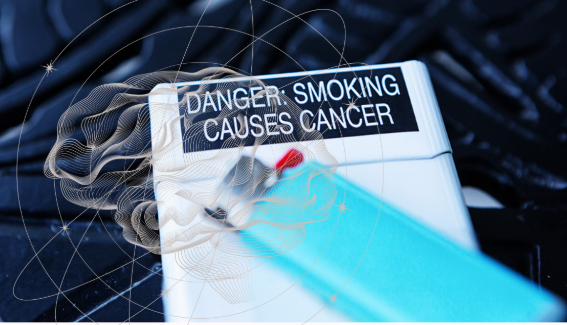
The more they warned, the more they smoked

Top line. Gruesome cigarette warnings backfired—driving smoking rates up instead of down. The reason? Hidden mental frictions like the reactance bias, which blocks persuasion when freedom feels threatened. This article unpacks five subconscious stumbling blocks, drawn from Jonah Berger’s The Catalyst, and offers tactics to help shift stubborn mindsets. Gruesome images and grim stats didn’t

The more they warned, the more they smoked Read More →

Unconscious branding in 7 steps

Top line. Douglas Van Praet’s research, published in Unconscious Branding, reveals a hard truth: 95% of human decisions happen preconsciously—and they stick. This article unpacks what his research shows and how to apply 7 proven steps  to influence the subconscious. Use them to build brand strategies that trigger instinct, shape feeling, and shift decisions and

Unconscious branding in 7 steps Read More →